
The husband you hope to become: kindness in ordinary moments
Connect the kind of home you hope to build with a habit you can practise today: pausing before you answer a request, then responding gently, including when you need to explain a limit.

Ahmad B
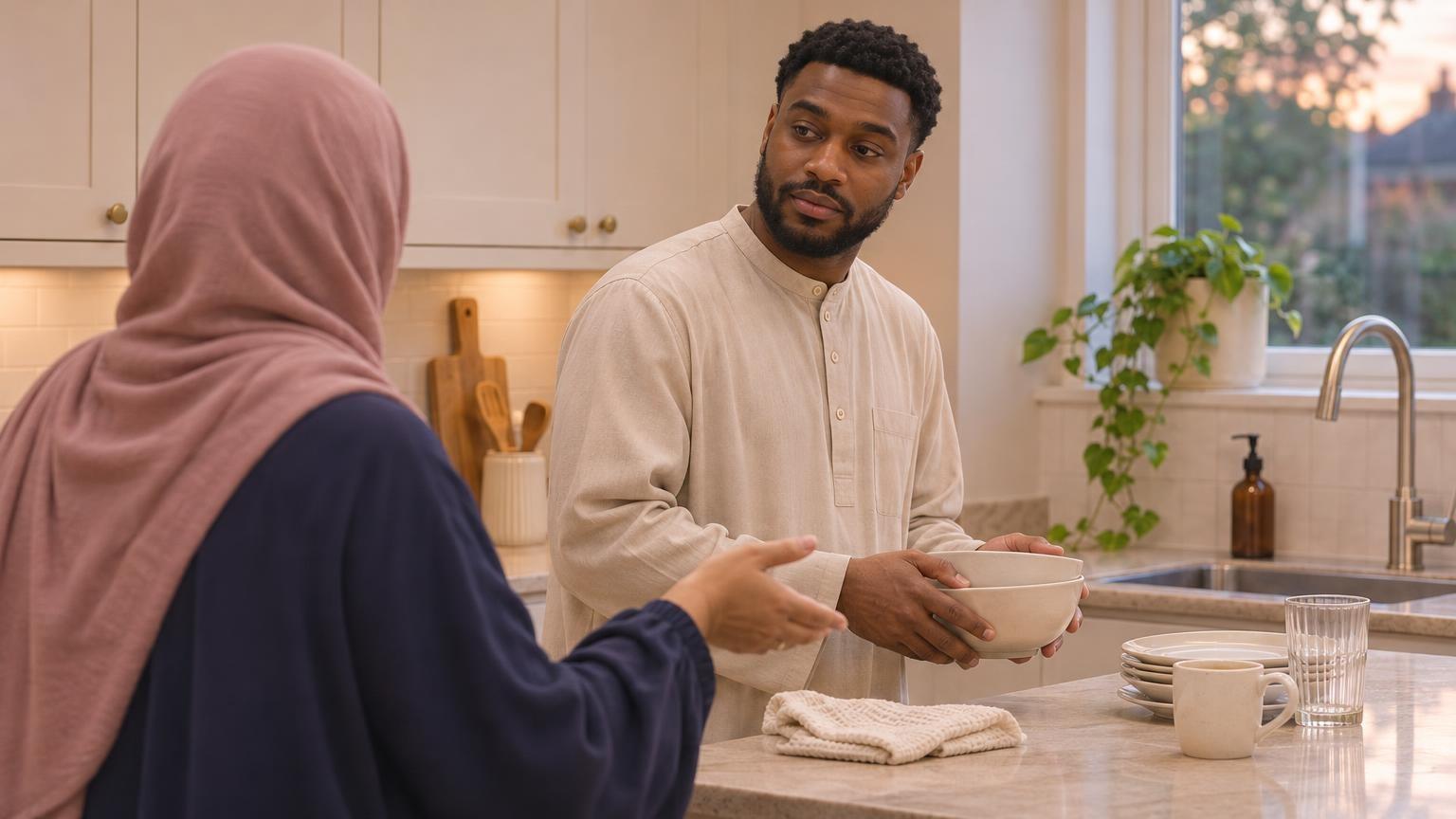
Assalamu alaikum dear brothers ✨,
You've had a tiring day. You've finally sat down, and someone at home asks you to help with something. Before the sharp answer comes out, try a small pause. Give yourself a moment to respond with the kindness you hope to bring into marriage, even if your answer needs to include, “I need a little rest first.”
A tiring day, then someone asks for help
Picture this: you've come home, put your things down and started thinking about dinner. Someone asks whether you can help clear the kitchen. You were hoping nobody would need anything from you for a while.
Perhaps your first impulse is, “Can't someone else do it?” Perhaps you say yes, but with a sigh that makes your frustration clear.
If you recognise yourself in that scene, use it as a place to practise. You don't need to turn one impatient answer into a judgement on your whole character. Look at the answer itself and consider what you would like to do differently.
Start by separating the request from what you were hoping would happen. You wanted quiet. Someone asked for help. Try answering that request without assuming they should have known how tired you were.
You might say, “Yes, I'll help. Let me put my things away first.”
Or, “I'm worn out. Let me have a rest for a bit first.”
Both make your willingness and your limit clear, without pretending you've had an easy day.
For this exercise, keep the focus on an ordinary, reasonable request. You don't need to settle every household disagreement or accept every demand. Choose a small moment in which you have room to respond more gently.
Connect your answer to the husband you hope to become
When you think about preparing for nikah, you might picture speaking to a wali, discussing mahr or explaining your plans for the future. Alongside those preparations, make room to consider your everyday akhlaq.
How would you like to answer your wife when she asks for help at the end of a long day?
Give yourself a concrete answer. Perhaps you hope to be a husband who listens before speaking, answers without ridicule and explains when he needs a break. Choose something you could actually hear yourself saying in the kitchen.
“I've had a difficult day too. Let's work out what needs doing first.”
Hold that sentence beside the way you answer people now. The point of the comparison is to choose a practice. You may already respond thoughtfully in some situations and want to improve in others.
For your own preparation, include this kind of practice alongside the other ways you're working on your deen. Ask yourself whether your words reflect the akhlaq you hope to bring into a shared home.
You don't have to manufacture a test. Use the next suitable request that comes your way: carrying something upstairs, clearing a table or helping with a small task when you'd rather stay seated.
Approach it with a simple intention: “I'd like to answer this well.” Let that be enough for the moment. There is no need to announce to everyone at home that you're practising for marriage.
Picture the home you want to build
Let yourself picture an ordinary evening after nikah. Leave the wedding arrangements out of it for a moment. Think about the home once the guests have gone and there are meals, washing and unfinished tasks to work through.
Perhaps you and your wife have both had demanding days. One of you asks for help. Imagine the answer you'd hope to hear, then consider the answer you'd want to give.
You might hope for a home where you can say, “I'm struggling today,” and be heard with care. Where a request receives an answer without a cutting remark. Where you can explain that you're tired without dismissing the other person's tiredness.
Make that picture specific enough to guide your own conduct. What would kindness sound like when you cannot help immediately?
“I can't manage that just now, but I can take care of it after dinner.”
What would it sound like when you haven't understood the request?
“Do you need a hand with this now, or would later work?”
Adapt these phrases to sound natural to you and fit what you can honestly offer.
Keep room in that picture for your own needs too. If you're unwell, exhausted or already occupied, say so plainly. Practise giving a considerate answer with a realistic limit, without offering help you have no intention of giving.
You cannot decide in advance how another person will respond, and this habit cannot promise you a particular marriage. Keep your attention on the part you're preparing: the words and actions you want to bring to it, in sha Allah.
Practise one pause today
Choose one habit for today: pause before answering a request.
You don't need a complicated routine. Let the person finish speaking. Take a breath. Then answer the request they've actually made.
If you can help, give a straightforward yes. If you need time, explain that and offer a time you can manage. If you cannot help, say so gently, without adding a remark about how much everyone expects from you.
For example: “I can't carry that today because my back is sore. I can help clear the space instead.” Only offer an alternative when you mean it.
If an impatient answer has already slipped out, you can still try again: “That came out sharply. I'm sorry. I'm tired, but I could have answered you better.” Then give the answer you wish you'd given first.
Avoid turning the apology into an argument about why the person should never have asked. For this small exercise, stay with your own response. Any wider conversation about sharing tasks can have its own time.
The home you hope to build may be easiest to imagine in its happiest moments. Give some thought to the evening when you're tired, there's washing-up waiting and someone calls your name from the next room.
Practise pausing and responding gently to one request today.
May Allah ﷻ help you bring gentleness to your words, strengthen your akhlaq and guide you as you prepare to build a home filled with kindness.
Ameen.

They're making du'a for you too.
Make your intention and take the first halal step.
New mobile app coming soon to iOS & Android
Free for sisters
Keep reading

Marriage in Islam: The Complete Guide
Everything Islam teaches about marriage: its purpose, its ruling, the conditions of a valid nikah, the rights of husband and wife, the halal process from proposal to walimah, and the customs to avoid.
Read article
Financial Discussions Every Muslim Should Have Before Marriage
Money is one of the most common sources of conflict in marriage. Islam gives a clear financial framework for spouses — but both parties need to understand it before the nikah, not after.
Read article
The First 90 Days of Marriage: Your Blueprint for a Strong Islamic Foundation
A comprehensive guide to the first 90 days of Islamic marriage. Learn how to build spiritual habits, communication patterns, and a strong foundation that will last a lifetime.
Read article