
Is Dating Haram in Islam? What the Quran and Sunnah Say
Is dating haram in Islam? Dating as most people know it is not allowed, but getting to know someone for marriage the halal way is. What the Quran and Sunnah say, and the halal alternative step by step.

Umm Abdullah
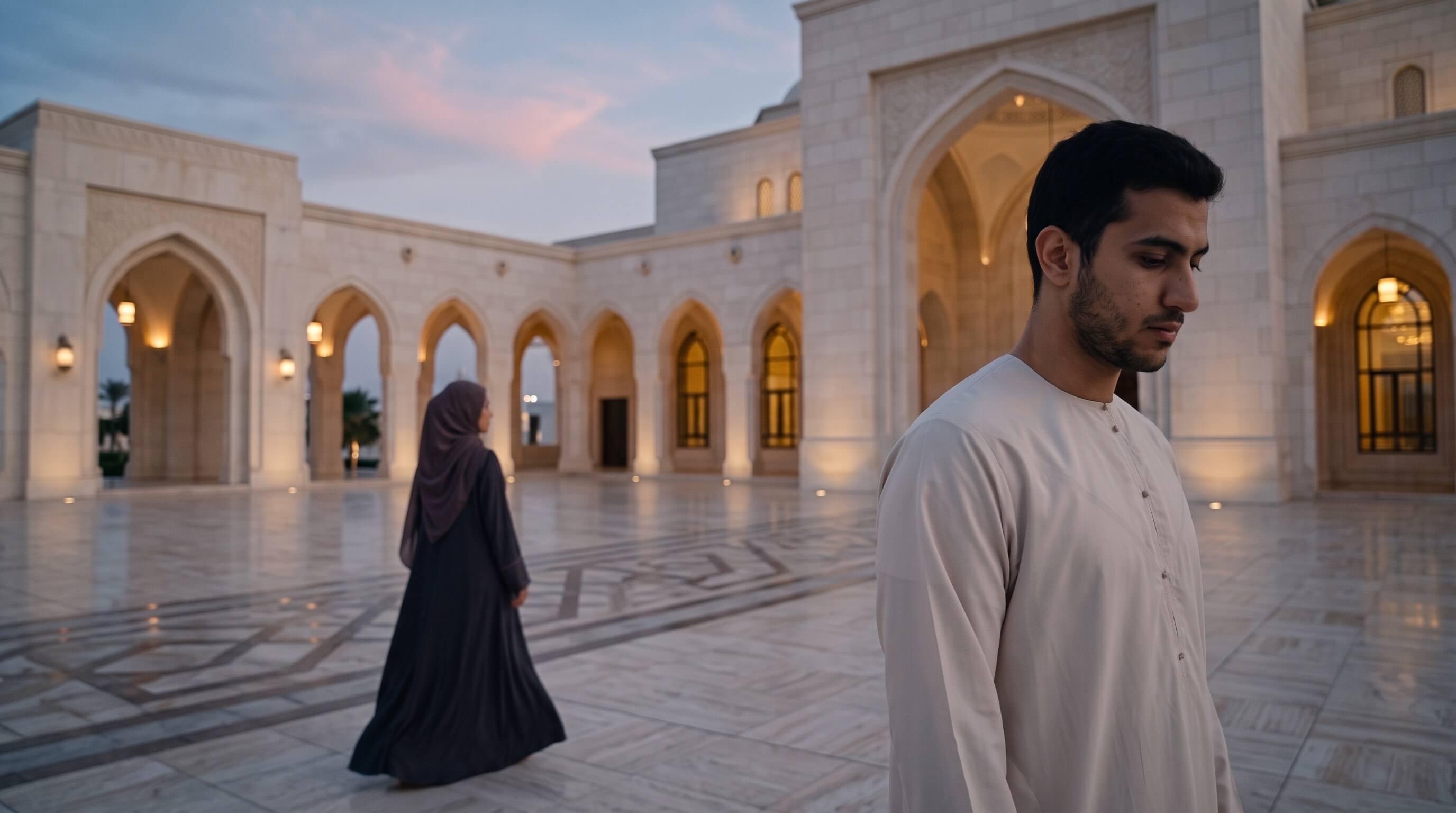
Assalamu alaikum dear brothers and sisters ✨,
dating, as most people understand it, is haram in Islam. Having a boyfriend or girlfriend, meeting alone, messaging privately every day, and building a romantic relationship outside of nikah are all things the Quran and Sunnah forbid. What Islam does allow, and encourages, is getting to know a potential spouse for the purpose of marriage, through the wali and family, with clear intentions and proper limits. So the question is not whether Muslims can get to know someone before marriage. They can. The question is how.
That answer is simple to state and hard to live, especially in the UK. Dating is everywhere: at school, at university, at work, on every screen. Many young Muslims grow up hearing that it is haram without ever being told why, or what they are supposed to do instead. Some end up dating in secret and feeling guilty. Others decide the rule is outdated and quietly drop it.
This guide sets out exactly what the Quran and Sunnah say about dating, why "halal dating" is not what it sounds like, and the halal path that actually leads to marriage.
What Do We Mean by Dating?
The word means different things to different people, so it helps to be precise.
When most people in Britain say dating, they mean two people who are attracted to each other spending time together, usually alone, to see whether a romantic relationship develops. It can lead to a boyfriend or girlfriend relationship. It may or may not lead to marriage, and often it is not intended to. People commonly date several people over the years before settling down, if they settle down at all.
Islam does not forbid men and women from ever speaking or ever knowing each other. It forbids a particular kind of relationship: private, romantic, and outside of the protection of nikah. That is what this article means by dating, and that is what the evidence below addresses.
The Quran on Dating
Allah ﷻ did not only forbid zina. He forbade approaching it:
"And do not approach unlawful sexual intercourse. Indeed, it is ever an immorality and is evil as a way." [Quran 17:32]
The scholars of tafsir explain that "do not approach" covers every path that leads towards zina, not just the act itself. Private romantic relationships are one of the most common of those paths. That is why the ruling on dating does not depend on whether a couple "does anything". The relationship itself is the approach.
Allah ﷻ also named the boyfriend and girlfriend relationship directly. When He describes the chaste believing women who may be married, He describes them as those who do not commit zina openly and who do not take secret lovers. [Quran 4:25]
And He describes believing men in the same way: they marry desiring chastity, not unlawful relations or taking secret lovers. [Quran 5:5]
The Arabic word used in both verses is akhdan, which refers to a companion taken in secret for a romantic relationship. That is a precise description of what modern dating looks like, and Allah ﷻ excluded it from the character of the believers.
Finally, Allah ﷻ commands both men and women to guard their gaze:
"Tell the believing men to reduce [some] of their vision." [Quran 24:30]
And in the next verse He gives the same command to believing women. Dating is built on looking at and spending time with someone you are attracted to. It runs directly against this command.
The Sunnah on Dating
The Prophet ﷺ addressed the core of dating, which is being alone with someone of the opposite gender:
"No man should stay with a lady in seclusion except in the presence of a Dhu-Muhram." [Sahih al-Bukhari 5233]
And 'Umar (may Allah be pleased with him) narrated from him:
"Behold! A man is not alone with a woman but the third of them is Ash-Shaitan." [Jami' at-Tirmidhi 2165]
A dinner for two, a walk in the park together, a drive, a cinema trip, or a late-night phone call are all forms of seclusion. The Prophet ﷺ did not say that Shaytan is present only when something sinful is planned. He said Shaytan is the third whenever a man and a woman who are not mahram are alone.
The Prophet ﷺ also taught that the sin of zina has early stages. In a hadith reported by Abu Hurairah (may Allah be pleased with him), he ﷺ described the zina of the eyes as looking at what is forbidden and the zina of the tongue as speech. [Sahih al-Bukhari 6243]
This is where most dating begins: looking, then talking. The Prophet ﷺ named those steps for what they are, long before any physical line is crossed.
"But We Don't Do Anything"
This is the most common response, and it deserves an honest answer.
Many Muslim couples who date say they keep it halal because there is no physical contact. They message, call, meet for coffee, and plan a future together, but they do not touch. They feel this puts them in a different category from non-Muslim dating.
It is true that physical contact is a greater sin. But the evidence above shows that the relationship itself is the problem: the secrecy, the seclusion, the looking and the romantic talk. A relationship can be deeply emotionally intimate without any physical contact at all, and that emotional intimacy is exactly what nikah is meant to protect.
The Prophet ﷺ gave a principle that settles grey areas like this:
"Leave what makes you in doubt for what does not make you in doubt." [Jami' at-Tirmidhi 2518]
If you would not be comfortable with your parents reading your messages, or with your future spouse knowing about the relationship, you already know which side of the line it is on.
The Prophet ﷺ also taught that faith has more than sixty branches, and that haya, a word that covers modesty, shyness and self-respect, is one of them. [Sahih al-Bukhari 9]
Dating culture works by gradually wearing haya down. Each step feels small, and each step makes the next one easier.
Is There Such a Thing as Halal Dating?
You will see the phrase "halal dating" on social media and in the marketing of some Muslim apps. Usually it means one of two things.
Sometimes it means a proper, Islamic process of getting to know someone for marriage, with the wali involved, conversations that have a purpose, and a decision within a reasonable time. That is permissible. But calling it "dating" is unhelpful, because the word carries everything Islam forbids.
More often, "halal dating" means ordinary dating with the physical contact removed: two people meeting alone, messaging privately for months, and building a romantic relationship without their families' involvement, while telling themselves it is acceptable because they intend to marry one day. That is not halal. It is dating with a halal label, and the label does not change the ruling.
The test is simple. Is the wali involved? Is there a clear intention of marriage, and a realistic timeframe? Are meetings in the presence of family or in an open setting, not in private? Are conversations focused on whether the two of you are suitable for marriage? If the answer to any of these is no, it is not a halal process, whatever it is called.
"What About Dating With the Intention of Marriage?"
Intention matters in Islam, but a good intention does not make a haram method halal. The Quran gives a clear example of this.
Speaking of men who wish to marry women who are still in their waiting period, Allah ﷻ allows them to hint at a proposal and acknowledges that they will think about these women. But He says that they must not make secret promises to them, except to speak in a proper way. [Quran 2:235]
Even when marriage is the goal, the secret relationship is excluded. The path to nikah has to be open.
That openness centres on the wali. The Prophet ﷺ said:
"There is no marriage without the permission of a guardian." [Sunan Abu Dawud 2085]
A relationship that deliberately keeps the wali out, even with marriage as the eventual plan, is working against the very structure Islam has built to protect the sister and make the marriage succeed. If you are serious about marriage, the first person who needs to know is her wali.
Is It Haram to Talk to the Opposite Gender at All?
No. Islam does not forbid all speech between men and women. Speaking for a genuine need, at work, at university, in a shop, at the GP surgery, or about a family matter, is permissible as long as it stays respectful and purposeful. The Companions spoke to the Mothers of the Believers from behind a screen to ask about the religion, and women came to the Prophet ﷺ with their questions.
What Islam restricts is the manner and the purpose. Allah ﷻ told the wives of the Prophet ﷺ:
"Then do not be soft in speech [to men], lest he in whose heart is disease should covet, but speak with appropriate speech." [Quran 33:32]
The scholars took from this a general principle for believing women and men: speak clearly and respectfully, without flirtation, without unnecessary familiarity, and without drifting into topics that have nothing to do with the need at hand. The line is crossed when conversation stops being about a task and starts being about each other.
Dating Culture at University and Work
For many British Muslims, the real test does not come at home. It comes at university and in the workplace, where dating is treated as completely normal and the opportunities are constant.
At university, freshers' week, shared halls, late-night study sessions and society socials all create situations where young men and women spend long periods together with no family around. At work, after-work drinks, office parties, travel for work and long hours alone with colleagues do the same. None of these situations is a sin in itself, but each one makes the slide into a relationship easier.
The practical answer is to decide your limits before you are in the situation, not during it. Keep group settings in groups. Avoid one-to-one socialising with someone of the opposite gender who is not your mahram. Keep work conversations about work and study conversations about study. Find Muslim friends who share your values, through your ISoc or your local masjid, so that your social life does not depend on settings that work against your deen. And if you feel yourself becoming attached to someone, take it seriously early, either by pursuing marriage properly or by stepping back.
Why Islam Forbids Dating
A Muslim accepts the ruling because it comes from Allah ﷻ. But the wisdom behind it is not hard to see, and many people who have dated can describe it from experience.
Dating gives two people all the emotional weight of a relationship with none of the commitment. Either one can walk away at any moment, owing nothing. The one who invested more is left heartbroken, often having shared things they cannot take back. Sisters very often carry the heavier cost, which is part of why the Sunni tradition places the wali at the centre of the process.
Dating also clouds judgement. When two people are emotionally attached before the families have even met, every question the wali asks feels like an attack and every red flag gets explained away. The halal process works the other way round: it asks the important questions first, while the heart is still free enough to hear the answers.
Serial dating brings its own harm. A person who has been in several relationships before marriage carries comparisons, memories and habits into their nikah. Many married Muslims who dated before marriage say plainly that they wish they had not.
And there is barakah. A marriage that begins in obedience to Allah ﷻ has His help from its first day. A relationship that begins in secret often carries guilt and mistrust into the marriage that follows.
The Halal Alternative, Step by Step
Islam does not ask you to marry a stranger without any knowledge of them. It gives you a better way to get to know someone.
It begins with intention. You are looking for a spouse, not a companion, and you are ready, or close to ready, to marry. The Prophet ﷺ said:
"Whoever among you is able to marry, should marry." [Sahih al-Bukhari 5065]
He ﷺ explained in the same hadith that marriage helps a person lower the gaze and guard their chastity, and that a young person who cannot yet marry should fast. Marriage is the solution Islam offers for the feelings that drive dating.
Next comes the introduction. A sister's family, friends, a trusted imam, a marriage event or a properly run marriage app can all be the starting point. What matters is that the brother approaches through the sister's wali rather than privately, and that the sister's wali knows from the beginning. Our guide on how to choose a Muslim marriage app explains what a halal platform should look like.
Then comes getting to know each other. The Sunnah allows a brother to see a sister he is seriously considering. The Prophet ﷺ told al-Mughirah ibn Shu'bah (may Allah be pleased with him), who had proposed to a woman:
"Look at her, for indeed that is more likely to make things better between the two of you." [Jami' at-Tirmidhi 1087]
Meetings take place with her wali or another mahram present, or in an open family setting. Conversations focus on what actually matters for a marriage: salah and deen, character, family, work and provision, where you would live, children, and expectations of each other's roles. Our guide on how long you should talk before marriage covers what this stage should look like and how long it should last.
Then comes the decision. Pray istikhara, consult your family and people who know the other person, and decide within weeks or a few months, not years. Our step-by-step guide to istikhara for marriage shows you how.
And then comes the nikah. Not after years of uncertainty, but as soon as the families agree and the practical matters are settled.
This process is not cold or mechanical. Many couples who married this way describe the getting-to-know stage as one of the most hopeful periods of their lives, precisely because it had a purpose, it had their families' blessing, and it led somewhere.
If You Are Dating Right Now
Many people reading this are not asking a theoretical question. They are in a relationship and feel both attached and uneasy.
If that is you, do not despair. Allah ﷻ says:
"Say, 'O My servants who have transgressed against themselves [by sinning], do not despair of the mercy of Allah. Indeed, Allah forgives all sins.'" [Quran 39:53]
Tawbah means stopping, regretting and resolving not to return. In practical terms, it means ending the private relationship. If you are both genuinely serious about marriage and suitable for each other, the brother should approach the sister's wali properly and the two of you should let the process happen in the open from now on. If marriage is not realistic, then the relationship has to end, however hard that is.
Do not tell yourself you will "make it halal later" while carrying on as you are. A relationship that continues in secret rarely turns into the blessed marriage people hope for. One that is ended for the sake of Allah ﷻ, and then pursued properly if it is meant to be, has a far better chance. We have written about this in more depth in our guide on whether love before marriage is haram.
A Word to Parents
Part of the reason so many young British Muslims date is that marriage has been made difficult. High expectations around wealth and status, long delays for education and careers, expensive weddings and narrow cultural preferences all push the age of marriage later and later, while the pressure on young people grows.
If you want your children not to date, make the halal path open to them. Take their wish to marry seriously, help them find suitable spouses, judge proposals on deen and character rather than caste and income, and keep the nikah and walima simple. A young person who can see a realistic route to marriage is far less likely to look for something else in the meantime.
The Love Worth Waiting For
Dating promises love and often delivers heartbreak. Islam promises something better. Allah ﷻ says:
"And of His signs is that He created for you from yourselves mates that you may find tranquillity in them; and He placed between you affection and mercy." [Quran 30:21]
The affection and mercy in that verse are placed by Allah ﷻ, within marriage. That is the love worth waiting for, and the halal path is how you reach it.
🔐 Ready to get to know someone the halal way?
💍 Join thousands of Muslims finding their match on Sunni Marriage, where every connection starts with sincerity and wali involvement from day one.
🚀 Create your free profile today

They're making du'a for you too.
Make your intention and take the first halal step.
New mobile app coming soon to iOS & Android
Free for sisters
Keep reading
Istikhara for Marriage: How to Pray It and Understand the Answer
A step-by-step guide to Salat al-Istikhara for marriage from the Sunnah: the full dua with meaning, when to pray it, how to understand the result, and the common mistakes to avoid.
Read article
What Does Islam Say About the Talking Stage?
The talking stage is everywhere in Muslim communities. Islam doesn't say never speak to a potential spouse — it says do it properly. Here is what that actually means.
Read article
Tahajjud Dua for Marriage: What to Ask and How to Pray It
Tahajjud is one of the most powerful times to make dua for a spouse. This guide covers how to pray it, what to ask, the specific duas to use, and how to keep going when the answer feels far away.
Read article