Assalamu alaikum dear brothers and sisters ✨,
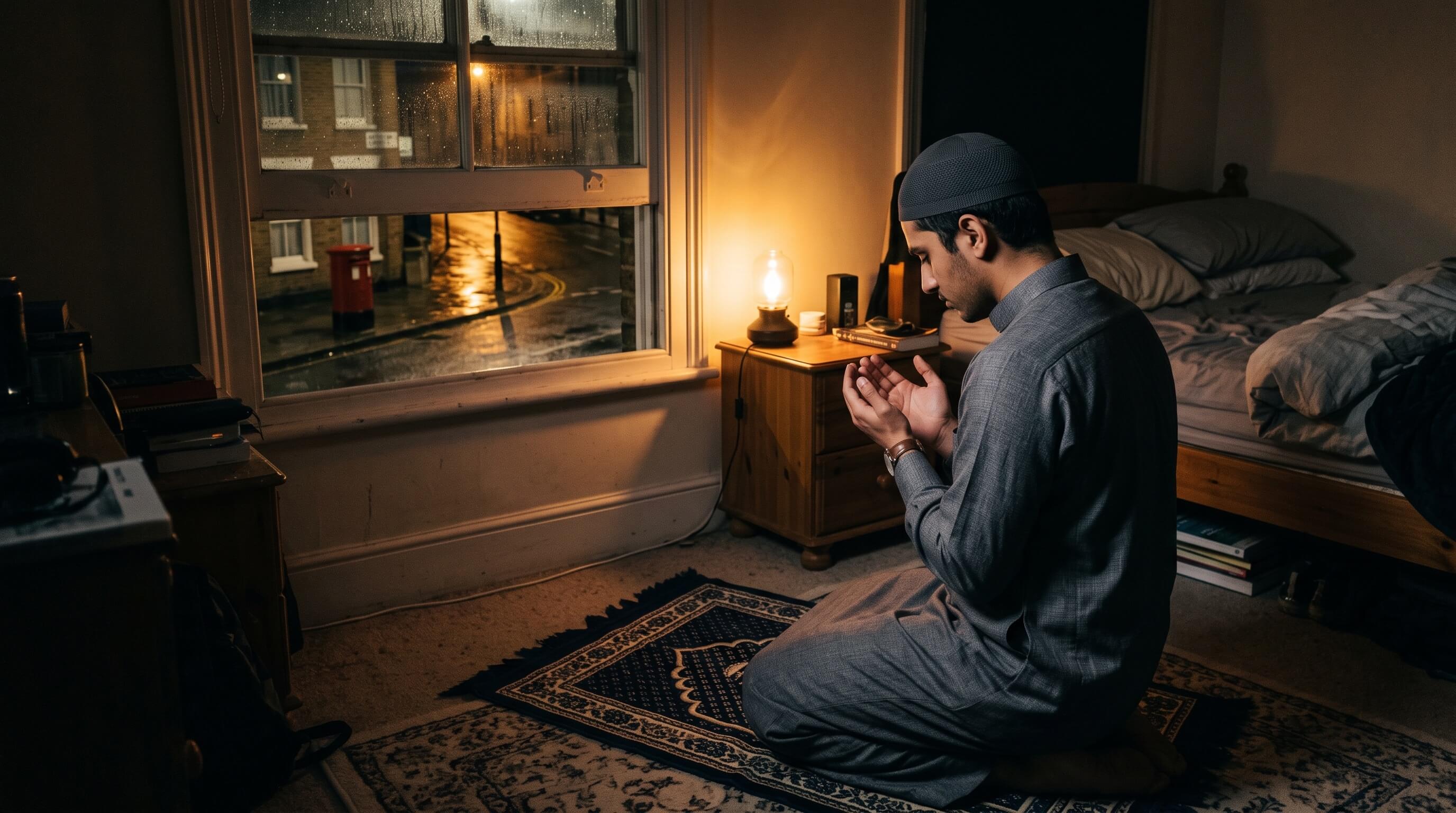
istikhara for marriage is a two-rak'ah voluntary prayer followed by a specific dua taught by the Prophet ﷺ, in which you ask Allah ﷻ to choose for you. You pray it when a particular proposal is in front of you, you name that proposal in the dua, and then you proceed with the matter, trusting that Allah ﷻ will make it easy if it is good for you and turn it away if it is not.
That is all istikhara is. It is not a dream service. It does not require a green light in your sleep, a sudden feeling of peace, or a sign from a stranger. It is a short, beautiful act of handing a decision to the One who knows what you do not.
Because istikhara is so often misunderstood, people either skip it entirely or lean on it in ways the Sunnah never taught. This guide walks you through the prayer step by step, gives you the full dua with transliteration and meaning, and answers the questions single Muslims and their families actually ask about istikhara for marriage.
The Hadith of Istikhara
Jabir ibn 'Abdullah (may Allah be pleased with him) said that the Prophet ﷺ used to teach the Companions istikhara in all their affairs, just as he taught them a surah of the Quran. He ﷺ said that when one of you intends to do something, he should pray two rak'ahs other than the obligatory prayer, then make the dua of istikhara, and then mention his specific need.
[Sahih al-Bukhari 1166]
Think about what that comparison means. The Companions did not learn a surah casually. They memorised it word for word and recited it with care. The Prophet ﷺ gave istikhara the same importance, and he taught it for all their affairs, small and large. If the Companions prayed istikhara over a journey or a trade, how much more does a decision as large as marriage deserve it?
The Istikhara Dua for Marriage
This is the dua as taught in the hadith of Jabir (may Allah be pleased with him). Learn it in Arabic if you can. If you cannot yet, read it from your phone or a piece of paper after the prayer. There is no harm in that.
Transliteration: Allahumma inni astakhiruka bi'ilmika, wa astaqdiruka bi-qudratika, wa as'aluka min fadlikal-'azim. Fa innaka taqdiru wa la aqdir, wa ta'lamu wa la a'lam, wa anta 'allamul-ghuyub. Allahumma in kunta ta'lamu anna hadhal-amra (name the matter) khayrun li fi dini wa ma'ashi wa 'aqibati amri, faqdurhu li wa yassirhu li thumma barik li fihi. Wa in kunta ta'lamu anna hadhal-amra sharrun li fi dini wa ma'ashi wa 'aqibati amri, fasrifhu 'anni wasrifni 'anhu, waqdur liyal-khayra haythu kana thumma ardini bih.
"O Allah, I seek Your guidance by virtue of Your knowledge, and I seek ability by virtue of Your power, and I ask You of Your great bounty. You have power and I have none. You know and I know not. You are the Knower of the unseen. O Allah, if You know that this matter is good for me in my religion, my livelihood and the outcome of my affairs, then decree it for me, make it easy for me, and bless it for me. And if You know that this matter is bad for me in my religion, my livelihood and the outcome of my affairs, then turn it away from me and turn me away from it, and decree for me what is good wherever it may be, and make me content with it."
[Sahih al-Bukhari 1166]
Where the dua says "this matter", you name it. For marriage you might say "my marriage to so-and-so, the son of so-and-so", or "accepting the proposal of so-and-so". You can name it in Arabic or in your own language.
Look closely at what you are asking for. You are not asking Allah ﷻ to give you this person. You are asking Him to give you this person if they are good for your deen, your worldly life and your end, and to take them away if they are not. Then you ask for something even greater: that whatever He decrees, He makes you content with it. That last line is where most of the peace of istikhara comes from.
How to Pray Istikhara for Marriage, Step by Step
First, settle the intention. You are praying istikhara about a specific, permissible matter: whether to proceed with a particular proposal. Make sure you have already done the basic checks. Istikhara is not a substitute for asking about a person's prayer, character, work and family.
Second, make wudu and pray two rak'ahs of voluntary prayer. The hadith does not fix particular surahs for these rak'ahs, so recite whatever you know. Some scholars recommended Surah Al-Kafirun in the first and Surah Al-Ikhlas in the second, but this is a suggestion, not part of the hadith, and the prayer is complete with any recitation.
Third, after the prayer, raise your hands, praise Allah ﷻ, send blessings on the Prophet ﷺ, and read the dua of istikhara, naming the proposal where the dua says "this matter". Most scholars said the dua comes after the salam, which matches the wording of the hadith "then let him say".
Fourth, avoid the times in which voluntary prayer is forbidden. 'Uqbah ibn 'Amir (may Allah be pleased with him) said there were three times at which the Messenger of Allah ﷺ forbade them to pray: as the sun is rising until it is fully up, when it is at its height until it passes the zenith, and as it is setting until it has set.
[Sahih Muslim 831]
Istikhara can wait a few minutes, so pray it outside those times. After 'Isha or in the last part of the night are both excellent, because they are quiet and because the last third of the night is a time when dua is especially answered.
Fifth, move forward. Continue with the normal process: your wali's enquiries, the families meeting, the practical conversations. Watch how the matter unfolds. That is where the answer lies.
When Should You Pray Istikhara for Marriage?
The scholars explain that istikhara is for matters that are permissible, where there is a genuine choice between doing something and not doing it, or between two good options. You do not pray istikhara about whether to pray Fajr, because that is already obligatory, and you do not pray istikhara about something haram, because that is already decided.
That has an important consequence for marriage. You do not need istikhara to decide whether marriage in general is good. Allah ﷻ has commanded it and the Prophet ﷺ encouraged it. Istikhara is for the specific question: should I proceed with this person?
So the right moment is when a specific proposal has reached a serious stage. A brother has approached your wali, or you have approached a sister's wali, the basic questions have been asked, and nothing obvious rules it out. That is when you pray. Praying istikhara about someone you have never asked about, or someone you are in a haram relationship with, misses the point of the prayer.
The Example of Zaynab bint Jahsh
The Sunnah gives us a beautiful example of istikhara for marriage from the Mothers of the Believers. When Zayd (may Allah be pleased with him) came to Zaynab bint Jahsh (may Allah be pleased with her) to convey the Prophet's ﷺ proposal of marriage, she did not give an answer on the spot. She said:
"I do not do anything until I solicit the will of my Lord."
[Sahih Muslim 1428b]
Then she went to her place of prayer. Think about who had proposed. It was the Messenger of Allah ﷺ himself, the best of creation. And still Zaynab (may Allah be pleased with her) turned to her Lord before giving her answer. Allah ﷻ then revealed verses of the Quran concerning her marriage.
If she sought Allah's ﷻ guidance over a proposal from the Prophet ﷺ, none of us is too certain of a proposal to need it.
Istikhara and Consultation Go Together
Istikhara is not meant to replace advice from people. Allah ﷻ told His Messenger ﷺ:
"And consult them in the matter. And when you have decided, then rely upon Allah."
[Quran 3:159]
Notice the order: consultation, then a decision, then tawakkul. Istikhara sits naturally inside that order. You ask Allah ﷻ to choose for you, and you ask the people around you for their knowledge and experience.
For a sister, the most important person to consult is her wali. He is not a formality. The Sunni tradition gives him a real role in her marriage precisely because he can see things she may not, and because a father or brother asks about a man in ways that a woman considering him often cannot. Her mother, her trusted friends who know the brother's family, and the imam who knows him are also worth hearing.
For a brother, consult his parents, people of knowledge, and people who actually know the sister's family. A man who prays istikhara but refuses to listen to anyone around him has done half of what the Sunnah teaches.
The wali himself can also pray istikhara. His decision to accept or decline a proposal for his daughter or sister is his own decision to make, so it is entirely appropriate for him to seek Allah's ﷻ guidance in it.
How Do You Know the Result of Istikhara?
This is the question people search for most, and it is where the most confusion lies.
The hadith does not mention a dream. It does not mention a feeling. It does not mention colours, signs, or waking up with a particular person's name on your mind. It mentions only what you ask for: that Allah ﷻ decree the matter and make it easy if it is good, and turn it away if it is not.
So the answer to istikhara is what happens next. If you proceed and the matter moves forward with ease, the families get along, the questions are answered well, the practical issues resolve and nothing blocks the way, then you continue with trust. If doors start closing, a serious issue comes to light, the wali has a sound objection, or the proposal falls apart, then Allah ﷻ has answered you too.
Many people feel an inclination of the heart after istikhara, towards the matter or away from it. Some scholars considered that inclination part of the answer. But it is not a condition, and you should not freeze waiting for it. A person who prays istikhara and then waits for weeks for a dream, while ignoring everything that is happening in front of them, has misunderstood the prayer.
Dreams are not to be dismissed entirely, since a righteous dream can be a glad tiding. But a dream is never a basis for overriding clear evidence. If you dream of someone but you have discovered they do not pray, you do not marry them because of the dream.
What If You Are Choosing Between Two Proposals?
Sometimes the question is not whether to marry a particular person but which of two proposals to take forward. Istikhara covers this too, because the Prophet ﷺ taught it for all affairs. The simplest approach is to pray istikhara about one proposal first, naming it, and then proceed with that one. If it moves forward with ease, continue. If it is turned away, pray about the other.
What you should not do is keep two proposals running in parallel for months, weighing them against each other while both families wait. That is unfair to everyone involved and it tends to produce exactly the kind of confusion istikhara is meant to remove. Do your basic enquiries on both, ask your wali or family which looks stronger on deen and character, then commit to one path and seek Allah's ﷻ guidance in it.
It also helps to be honest about why you are torn. If one proposal is stronger in deen and the other is stronger in looks, money or status, you already know what the Sunnah prioritises. Istikhara is not there to rescue you from a choice the Prophet ﷺ has already made clear. It is there for the genuinely close calls, where both options are good and you need Allah ﷻ to choose what is best.
Can You Repeat Istikhara?
Yes. Istikhara is a dua, and you may repeat a dua as many times as you need. If the matter is still unclear after the first time, you can pray it again on another day. Some people quote a narration telling you to pray istikhara seven times and look at what your heart inclines to. That narration is weak and should not be relied upon. Repeating is permissible because it is dua, not because a specific number is required.
Can Someone Else Pray Istikhara for You?
There is a growing industry of people who offer to "do istikhara for you", often for a fee, and then tell you whether a proposal is good or bad. Be very careful.
The hadith addresses the person who is facing the decision: "when one of you intends to do something". The scholars differed over whether someone can pray istikhara on behalf of another, and the safest position is to pray it yourself. That is also the more beautiful position, because istikhara is an intimate conversation between you and your Lord about your own life.
Your parents, your wali and your friends can and should make general dua for you. That is different from handing your decision to a stranger who claims to read the unseen through a ritual. Nobody knows the unseen except Allah ﷻ, and anyone who claims to tell you who your spouse is through a "reading" has stepped into something far more serious than a bad habit.
Common Mistakes With Istikhara for Marriage
Praying istikhara about a haram relationship is one of the most common mistakes. If you are in a secret relationship with someone, istikhara is not the first step. The first step is to stop the haram and bring the matter to the wali properly. Then pray istikhara about the proposal.
Using istikhara to override clear red flags is another. If a person does not pray, has a pattern of dishonesty, or has a serious problem that has come to light, you do not need a prayer to tell you what the Sunnah has already told you. Istikhara is for a choice between permissible options, not for talking yourself into ignoring the obvious.
Using istikhara to override the wali is a third. A sister who prays istikhara, feels positive, and then treats that feeling as permission to go against her wali's sound objection has misunderstood both istikhara and the role of the wali. Istikhara works within the process Allah ﷻ has set, not around it.
Finally, some people pray istikhara and then refuse to take any step at all, waiting for certainty that never comes. Allah ﷻ tells us to decide and then rely upon Him. Pray, consult, and then move.
What If You Are on Your Period?
A sister who is menstruating cannot pray, so she cannot pray the two rak'ahs of istikhara. If the decision can wait, she can wait until she is pure and then pray it. If it cannot wait, many scholars said she may make the dua of istikhara on its own without the prayer, since the dua is a supplication and a menstruating woman is not prevented from supplicating.
After the Istikhara
Whatever happens next, remember the last words of the dua: "and make me content with it". If the proposal goes ahead, thank Allah ﷻ and keep asking Him to bless it. If it falls apart, you asked for exactly this, that Allah ﷻ turn it away if it was not good for you. That is not a failed istikhara. That is an answered one.
Allah ﷻ says:
"But perhaps you hate a thing and it is good for you; and perhaps you love a thing and it is bad for you. And Allah knows, while you know not."
[Quran 2:216]
And He says:
"And whoever relies upon Allah, then He is sufficient for him."
[Quran 65:3]
If you are still waiting for a proposal to pray istikhara about, keep asking. Our guide to the best dua for marriage has the duas from the Quran and Sunnah and the times when dua is most likely to be answered.
🔐 Ready for a proposal worth praying istikhara over?
💍 Join thousands of Muslims finding their match on Sunni Marriage, where every connection starts with sincerity and wali involvement from day one.
🚀 Create your free profile today