
How to Find a Muslim Husband: A Halal Guide for Sisters
A practical, step-by-step guide for sisters on how to find a Muslim husband the halal way: what to look for, how to involve your wali, where to look in the UK and how to vet him properly.

Umm Abdullah
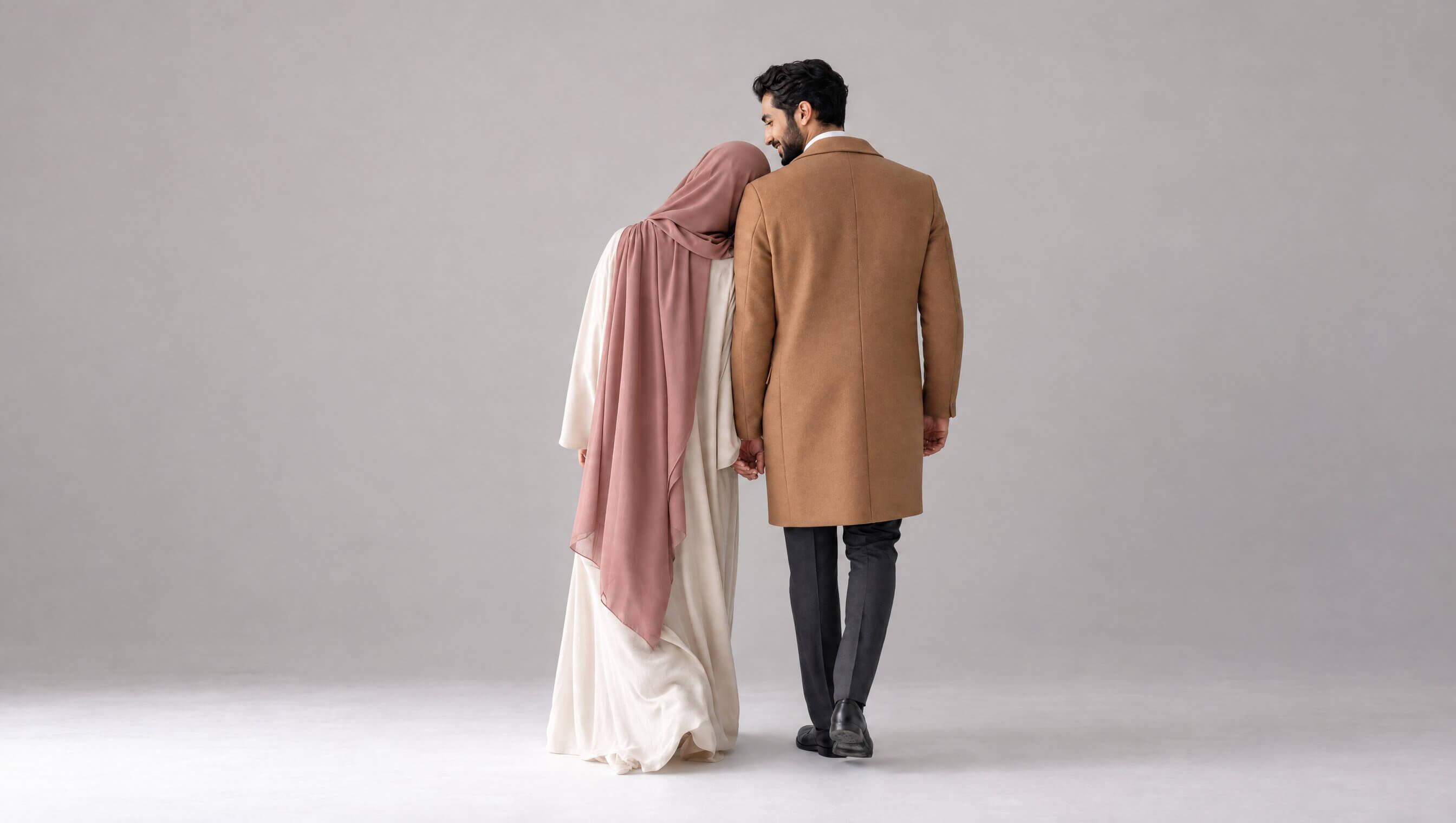
Assalamu alaikum dear brothers and sisters ✨, If you are wondering how to find a Muslim husband the halal way, the short answer is this: get clear on what you need in a husband, involve your wali from the start, let trusted people know you are looking, use channels that keep the process accountable, vet him properly, and make dua throughout. That is the whole method. The rest of this guide is about doing each step well.
Because the truth is that most sisters are not short of sincerity. They are short of a clear process. You pray, you hope, you wait, and the years pass. Meanwhile the advice you get is either "just be patient, it will come" or a list of warnings about what not to do, with very little about what you actually should do on a Tuesday evening when you are 27, practising, and no closer to marriage than you were three years ago.
Islam does not ask you to sit still and wait for a knock at the door. It gives you a framework that protects you and still lets you take real steps. Here is how that framework works in practice, especially for sisters in the UK.
Is It Okay for a Sister to Actively Look for a Husband?
Many sisters carry a quiet guilt about this question. Somewhere along the way they absorbed the idea that a "good" Muslim woman never makes any move at all, that wanting marriage openly is somehow immodest, and that the only acceptable path is to wait until someone else arranges everything.
The Sunnah tells a different story. A companion of the Prophet ﷺ, Anas ibn Malik, was once sitting with his daughter when he related this:
"A woman came to Allah's Apostle and presented herself to him, saying, 'O Allah's Messenger (ﷺ), have you any need for me (i.e. would you like to marry me)?' Thereupon Anas's daughter said, 'What a shameless lady she was! Shame! Shame!' Anas said, 'She was better than you; she had a liking for the Prophet (ﷺ) so she presented herself for marriage to him.'" [Sahih al-Bukhari 5120]
Anas did not praise her in spite of her taking the initiative. He praised her for it. Her desire for a righteous husband was something good, and she pursued it openly and with dignity.
The Qur'an gives another example. When Musa (peace be upon him) helped two young women water their flock, one of them later spoke to her father about him:
"One of the two daughters suggested, 'O my dear father! Hire him. A strong, trustworthy person is definitely the best to hire.'" [Quran 28:26]
Notice what she did. She noticed a man of good character, and she raised it with her father. She did not pursue him privately. She brought her observation to her guardian, and her guardian took it from there. That single verse is almost a summary of the halal process: a woman with a voice, and a wali who acts on it.
So yes, you are allowed to want marriage. You are allowed to take steps towards it. The question is never whether you look. It is how you look.
Step 1: Get Clear on What You Actually Need
Before you look anywhere, you need to know what you are looking for. This sounds obvious, yet a surprising number of sisters enter the search with either a vague hope ("someone good") or an enormous list that no human being could satisfy.
Islam gives you a clear centre of gravity. The Prophet ﷺ said:
"The most complete of the believers in faith, is the one with the best character among them. And the best of you are those who are best to your women." [Jami' at-Tirmidhi 1162, graded Hasan]
Deen and character. Those are the two things that decide what your daily life with a man will actually feel like. Does he pray? Does he hold himself to the limits Allah ﷻ has set when nobody is watching? How does he speak to his mother, to a waiter, to someone who has annoyed him? Does he keep his word? Is he gentle when he has the power not to be?
Height, job title, which city he lives in, and whether his family is from the same village as yours are preferences. Some of them matter to you, and that is fine. But they are not foundations. Sisters who confuse the two often reject good men for small reasons and accept difficult men because the surface looked right.
A useful exercise is to write two short lists. The first is your non-negotiables, and it should be short: perhaps five things, almost all about deen, character and the basics of responsibility. The second is your preferences, the things you would like but could live without if everything on the first list was there. If your first list is longer than your second, it is worth reading our honest piece on why a long list of requirements may be keeping you single.
Getting clear also means being honest about yourself. What are you bringing to a marriage? What are you still working on? A sister who knows her own strengths and gaps chooses better, because she is not looking for a husband to complete her. She is looking for a partner to build with.
Step 2: Bring Your Wali In From the Start
This is the step that changes everything, and it is the one sisters most often leave until too late.
"There is no marriage without the permission of a guardian." [Sunan Abi Dawud 2085, graded Sahih by al-Albani]
In the view of the majority of Sunni scholars (the Maliki, Shafi'i and Hanbali schools), the wali is a condition of a valid nikah, and in every school he is far more than a formality you call in at the end to sign a form. He is part of the process from the first serious conversation. For most sisters, the wali is her father. If her father has passed away or cannot act, it moves to other close male relatives in a set order. If you are not sure who your wali is, or you are a revert whose family is not Muslim, read who is the wali and what to do if you don't have a wali. There is always a route.
Why does involving him early matter so much in practice?
First, it filters out the wrong men almost instantly. A man who is serious about marriage expects to meet your wali and welcomes it. A man who is not serious will hesitate, delay, find excuses, or ask you to keep things between the two of you "for now". That reaction tells you more than a month of conversations.
Second, your wali can ask questions you might feel awkward asking. About his finances. About his past. About how he handles conflict. About what he expects of a wife. Our guide to questions every wali should ask is worth sharing with your father or brother before anyone comes forward.
Third, it protects your heart. When conversations happen in the open, with a third person involved and a clear purpose, you are far less likely to become emotionally attached to someone before you know whether he is right for you.
The wali's role also has limits, and you should know them. Your consent is a condition of the marriage, not an optional extra:
"A matron should not be given in marriage except after consulting her; and a virgin should not be given in marriage except after her permission." [Sahih al-Bukhari 5136]
So the wali protects and guides, and you decide. A healthy search is a partnership between the two of you. Talk to him openly. Tell him you are ready, tell him what matters to you, and ask him to be active rather than waiting for proposals to fall into his lap.
Step 3: Let the Right People Know You Are Looking
Here is a pattern that keeps a lot of good sisters single: they are ready for marriage, but almost nobody knows it.
They assume their family knows. They assume the aunties at the masjid know. They assume that if someone suitable existed, word would have reached them. But people are busy, and a sister who never mentions marriage is often assumed to be focused on her studies, her career, or simply not interested yet.
The Qur'an places responsibility on the wider community here, not only on you:
"Marry off the ˹free˺ singles among you, as well as the righteous of your bondmen and bondwomen. If they are poor, Allah will enrich them out of His bounty. For Allah is All-Bountiful, All-Knowing." [Quran 24:32]
The command is addressed to the people around the single person. Your family, your community and your trusted friends have a role. But they can only play it if they know.
So tell them. Tell your parents clearly that you would like to get married and that you would like them to actively look. Tell a few trusted married sisters, especially those whose own marriages you respect, because they know practising brothers through their husbands. If your masjid has an imam or a sister's committee that helps with introductions, let them know too.
Keep the circle trusted, not wide. You are not announcing it on social media. You are asking specific people of good character to keep you in mind and to bring suitable men to your wali, not to you directly.
Step 4: Where to Meet Muslim Men the Halal Way
The question of where to actually meet someone is the one sisters ask most, particularly in the UK, where many families are spread out and the old village networks have thinned. There is no single right channel. What matters is that whichever one you use keeps the process accountable and involves your wali.
Through family and friends
This is still the most common route, and for good reason. When a man is introduced through people who know him, you get information that no profile can give you: how he is at home, what his family is like, how he has handled past responsibilities. The weakness is that it can be slow, and it depends on your family being active and open-minded about who they suggest.
Through your masjid and community
Many UK masjids and Islamic centres quietly help with introductions, either through the imam or through a marriage service. Islamic classes, community volunteering and charity work also put you in the same spaces as practising men, in settings where adab is normal and a brother who notices your character can approach your family properly. You are not going there to look for a husband. But serving your community well is good in itself, and it is also where good people tend to notice each other.
Through Muslim marriage apps
For many sisters today, apps are a practical way to meet people outside their immediate circle. They can work very well, and many couples have married through them. They can also become exactly the open-ended, private, no-accountability chatting that leaves people hurt.
The difference is in the design and in how you use it. Look for a platform built around marriage rather than endless swiping, one that involves the wali from the start and does not encourage private conversations that drift on for months. We wrote an honest guide on whether Muslim marriage apps actually work, and it applies to sisters as much as to brothers.
Whatever app you use, bring your wali in as soon as a conversation looks promising. Keep conversations purposeful. And if a man resists your wali being involved, take that as your answer.
Through marriage events
Muslim marriage events are popular in London, Birmingham and Manchester. Some are run well, with families present and clear Islamic guidelines. Others are much looser. If you go, ask beforehand how the event is run, whether walis and families are welcome, and what happens after an introduction. Go with your wali or a family member if you can.
Step 5: Present Yourself Honestly and Clearly
Whether it is a profile on an app, a short biodata your family shares, or a conversation with an imam who is helping, how you describe yourself shapes who comes forward.
Be honest. If you wear the niqab, say so. If you want to keep working after marriage, say so. If you would like to live near your parents, say so. Hiding important things to appear more "available" simply means you will attract men who are wrong for you and waste months finding that out.
Be specific about your deen without performing it. "I pray five times a day and I'm working on my Qur'an memorisation" tells someone far more than a paragraph of general statements about being practising.
And describe what you are looking for in terms of character, not a shopping list. A sister who describes her values clearly will hear from fewer men, but far more of the right ones.
Step 6: Vet Him Properly Before You Say Yes
Finding a man is only half of finding a husband. The other half is finding out whether he is actually the man he appears to be.
This is where so many regret stories begin. A sister meets someone who seems ideal. Everyone is excited. The nikah is rushed because there seems no reason to wait. And then, months later, the red flags that were there all along become impossible to ignore.
Proper vetting is not suspicion. It is responsibility. Here is what it involves.
Ask the real questions
Ask about his salah, his relationship with his parents, his finances and any debt, his expectations of a wife, where he wants to live, how he handles anger, and what he thinks a good marriage looks like. Ask what he did the last time he made a serious mistake. Ask, and then listen to how he answers as much as what he says.
Speak to people who know him
Your wali, or a trusted male relative, should speak to people who know him well: an imam at his masjid, friends of long standing, people he has worked with. Ask about his character, not his reputation. The two are not always the same.
Watch the pattern, not the moment
Anyone can be charming in a few conversations. What you want to see is consistency. Does he follow through on what he says? Is he the same with your wali as he is with you? Does he move the process forward, or does every next step get delayed? Our guide on how to know if he is serious about nikah goes through the signs one by one, and our piece on red flags in men covers what to walk away from.
Keep the talking stage halal and purposeful
Getting to know someone before marriage is allowed, and it is wise. The problem is the private, open-ended version that has no timeline and no accountability. Keep your wali informed and involved, keep conversations focused on whether you are suited for marriage, and agree a rough timeline early. Purpose and openness are what make it halal, not the absence of conversation.
Step 7: Make Dua, Pray Istikhara and Trust Allah ﷻ
None of the steps above replaces dua. And dua does not replace the steps. They work together.
When Musa (peace be upon him) arrived in Madyan alone, a stranger with nothing, he helped the two women and then turned to his Lord with this:
"My Lord! I am truly in ˹desperate˺ need of whatever provision You may have in store for me." [Quran 28:24]
He had acted. He had done good. And then he admitted his complete need before Allah ﷻ. What followed, as the next verses describe, was the very family that would give him a home and a wife. That is the model: take the step in front of you, then hand the outcome to Allah ﷻ with real humility.
When a specific proposal comes and you are seriously considering it, pray Salat al-Istikhara. It is not a test that produces a dream or a feeling. It is a request for Allah ﷻ to make the matter easy if it is good for you and to turn it away if it is not. Our guide to istikhara for marriage explains how to pray it and how to understand what happens afterwards.
And trust that Allah ﷻ sees your effort:
"And whoever fears Allāh - He will make for him a way out. And will provide for him from where he does not expect. And whoever relies upon Allāh - then He is sufficient for him." [Quran 65:2-3]
Taqwa and reliance on Allah ﷻ are not the opposite of taking action. They are what keep your actions clean, and they are what keep your heart steady when things take longer than you hoped.
Common Mistakes That Keep Sisters Stuck
After all of this, it helps to name the habits that quietly hold sisters back.
The first is waiting passively. Hoping someone will simply appear, without telling your family, without exploring any channel, and without speaking to your wali about being active. Patience is a virtue. Passivity is not the same thing.
The second is keeping everything private. Sisters sometimes start conversations without their wali because they want to "see if it's going anywhere first". It feels safer. In reality, it is the least safe way to do this, because you are emotionally invested before anyone has checked a single thing about him.
The third is judging by the wrong measure. Rejecting a practising, kind man because his job does not sound impressive enough, and then accepting a man whose deen is weak because he looked good on paper. This is the exact mistake the Prophet ﷺ steered us away from when he made character the measure of faith.
The fourth is staying in something that is going nowhere. If a man has been "about to speak to your father" for six months, he is not about to speak to your father. It is better to close it kindly and keep your heart open for someone who is ready.
The fifth is giving up. After a few disappointing introductions, some sisters stop looking altogether and tell themselves it is just not written for them. Disappointment is part of the search for almost everyone. It is not a sign that you should stop.
What If It Is Taking a Long Time?
For many sisters, the hardest part is not any single step. It is the wait. Friends get married. Family ask questions. You wonder whether you have missed your chance, or whether something is wrong with you.
Nothing is wrong with you. Delay is not rejection, and the timing of your marriage is written by the One who knows you best. That does not mean you sit back. It means you keep doing your part with sincerity while trusting the outcome to Allah ﷻ.
Use the time well. Grow in your deen, in your knowledge and in your character. Learn about marriage itself: rights, responsibilities and what it actually takes to build a home. Look after your health and your relationships. The woman you become while you wait is the woman your husband will marry.
And remember why you are doing this. Marriage is not just the end of loneliness or the answer to family questions. It is one of the signs of Allah ﷻ:
"And of His signs is that He created for you from yourselves mates that you may find tranquility in them; and He placed between you affection and mercy. Indeed in that are signs for a people who give thought." [Quran 30:21]
Tranquillity, affection and mercy. That is what you are looking for. It is worth searching for carefully, and it is worth waiting for properly.
Bringing It All Together
So, how do you find a Muslim husband? You get clear on what matters: deen and character first, preferences second. You bring your wali in from the very beginning and treat him as your partner in the search. You let trusted people know you are ready. You use channels that keep everything accountable, whether that is family, your masjid, a well-run event or a marriage app built around the wali. You present yourself honestly. You vet properly and refuse to rush past red flags. And you make dua and istikhara throughout, trusting Allah ﷻ with the result.
None of this guarantees a timeline. But it does mean that when the right man comes, you will recognise him, your family will already know him, and you will be able to say yes with a calm heart.
May Allah ﷻ bless every sister reading this with a righteous husband who is the coolness of her eyes, and make the path to him easy. And Allah ﷻ knows best.
🔐 Finding a righteous husband starts with the right process: your wali involved, your intentions clear and your heart protected. 💍 Join thousands of Muslims finding their match on Sunni Marriage, where every connection starts with sincerity and wali involvement from day one. 🚀 Create your free profile today

They're making du'a for you too.
Make your intention and take the first halal step.
New mobile app coming soon to iOS & Android
Free for sisters
Keep reading
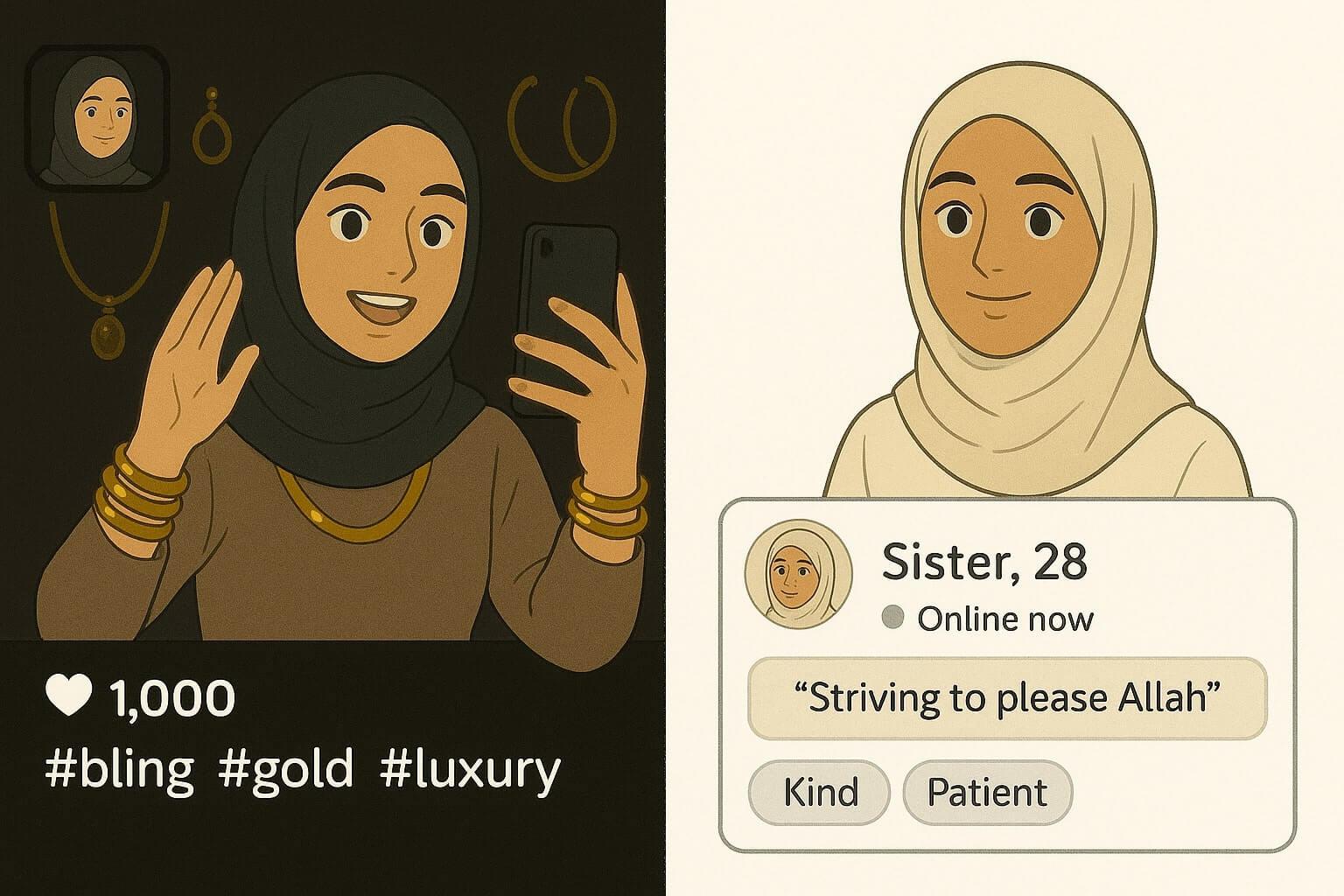
How to Improve Your Marriage Profile the Right Way (For Muslim Sisters Seeking Marriage)
A thoughtful guide for Muslim sisters who want their marriage profile to reflect sincerity, clarity, and taqwa—without exaggeration, confusion, or compromise.
Read article
What Makes a Man Attractive for Marriage
True attractiveness in Islam goes beyond appearance. Discover the qualities that make a man truly desirable for marriage — rooted in deen, character, and emotional maturity.
Read article
What Is Husband Material?
In a world full of checklists and unrealistic expectations, what truly makes a man worthy of marriage? Islam gives us a clear blueprint. Here's what 'husband material' really means — through the lens of deen, responsibility, and mercy.
Read article